Imagine your business is booming, but your storage is a bottleneck. Orders stack up, and managing inventory becomes a nightmare. Sound familiar? You’re not alone in this challenge.
Partnering with third-party logistics providers is the key. 3PL warehouse space changes how you tackle supply chain issues. You get access to top-notch facilities and expertise, freeing you from storage and logistics woes.
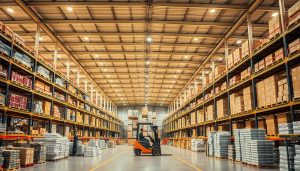
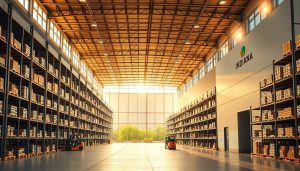
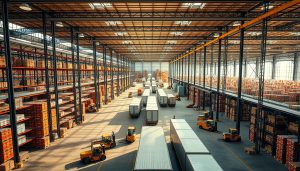
Broadrange Logistics gets it. We have nearly 9 million square feet of Class A facilities across the U.S. Plus, through our network, you get to more than 50 million square feet of premium storage.
This isn’t just about storage. It’s about operational transformation. Modern warehouse logistics partnerships cut through bottlenecks, slash costs, and boost growth. The right 3PL warehouse space gives you an edge in today’s fast market.
Key Takeaways
- Strategic 3PL partnerships eliminate operational bottlenecks and reduce overhead costs
- Access to nearly 60 million square feet of premium storage through Broadrange Logistics network
- Professional warehouse logistics infrastructure accelerates business growth trajectories
- Third-party logistics solutions provide scalability without capital investment
- Modern 3PL services transform supply chain management into competitive advantages
- Class A facilities across the United States ensure nationwide coverage and reliability
Understanding Third-Party Logistics and Warehouse Solutions
The world of warehouse operations has changed a lot with the rise of third-party logistics providers. These partnerships are more than just places to store things. They build full supply chain systems that help businesses grow and work better.
In today’s fast-paced market, businesses need to be quick and efficient. Many companies choose to outsource their logistics. This lets them focus on what they do best while using experts for logistics. This change has changed how businesses manage their supply chains.
What is 3PL Warehouse Space
Third-party logistics warehouse space is about places that offer full storage, handling, and distribution services. These places save businesses from having to spend money on their own warehouses. Instead, they get access to top-notch services without the high costs.
Today’s 3PL warehouse spaces do more than just store things. They use the latest technology to manage stock, track shipments, and plan out transportation. This makes your business operations run smoothly and reliably.
The location of these distribution centers is very important. Being near big transportation hubs cuts down on shipping time and cost. It also helps businesses reach more customers and enter new markets.
“The best 3PL partnerships feel like an extension of your own team, not an external vendor.”
Key Components of Modern 3PL Operations
Today’s third-party logistics operations have many advanced parts that work together well. These parts make a complete system that handles all warehouse and distribution tasks with expert skill.
| Component | Function | Business Impact | Technology Integration |
| Inventory Management | Real-time stock tracking and optimization | Reduced carrying costs and stockouts | WMS and RFID systems |
| Order Processing | Automated fulfillment and shipping | Faster delivery times and accuracy | EDI and API connections |
| Transportation Coordination | Multi-carrier shipping management | Optimized shipping costs and routes | TMS and route optimization |
| Quality Control | Product inspection and compliance | Maintained brand reputation | Automated sorting and scanning |
These components work together to create a strong system. This system adapts to changing business needs and market conditions.
Advanced distribution centers also offer extra services. These include custom packaging, labeling, kitting, and assembly. Such services let businesses give personalized experiences without having to have their own facilities.
The Evolution of Third-Party Logistics
The change in third-party logistics from simple warehousing to full supply chain management shows big changes in business. Early 3PL providers mainly stored and transported goods. Now, they offer complete solutions for supply chain management.
Technology has driven this change. Modern systems give real-time views of stock, orders, and shipments. This helps businesses make smart choices and quickly adapt to market changes.
The growth of e-commerce has also pushed 3PL to evolve. With the need for fast and accurate delivery, providers have developed advanced fulfillment options. Now, same-day and next-day delivery are common from top distribution centers.
With over 20 years in the business, Broadrange Logistics aims to be the ideal supply chain partner with comprehensive 3PL services. This shows how experienced providers have kept up with market changes while staying top-notch.
The future of third-party logistics will keep changing with new tech like AI and robotics. These innovations will make warehouse operations even more efficient and accurate. Smart businesses know that working with forward-thinking 3PL providers helps them succeed in a competitive market.
Core Benefits of Outsourcing Your Warehouse Operations
Outsourcing warehouse operations brings big benefits beyond just saving money. It gives businesses a strategic edge in today’s fast-paced market. By working with top third-party logistics providers, companies can improve how they work and get access to the best tools and knowledge.
Choosing to outsource warehouse tasks is a big change for businesses. It lets them use proven supply chain solutions without having to build them themselves. This way, companies can focus on what they do best while getting help from experts in logistics.
Cost Reduction and Capital Investment Savings
Outsourcing warehouses saves money right away and in the long run. Companies don’t have to spend a lot on building facilities, buying equipment, or setting up technology. This can save millions for medium to large businesses.
Operational expense reduction happens in many areas. Companies save on things like renting space, paying for utilities, maintenance, and insurance. They also save on labor costs because they don’t have to hire and train their own warehouse staff.
Using the same resources for many clients also saves money. This shared model lowers costs per item handled while keeping service quality high. It’s a smart way to use resources.
Outsourcing also helps with taxes. Companies can turn fixed assets into variable costs, improving cash flow. This can make their financial situation look better and help with financial ratios.
Scalability and Flexibility Advantages
Market changes require flexible warehouse solutions. Traditional warehouses can’t grow as easily. Supply chain solutions from 3PL partners offer the flexibility to scale up or down quickly.
Handling seasonal demand changes is easier with flexible space. Retailers can grow their warehouse space when needed without long-term commitments. This avoids wasting money on too much space when it’s not busy.
Expanding into new areas is faster with established networks. Companies can enter new markets right away without waiting for new facilities. Broadrange Logistics offers a wide network of Class A warehouses across key markets.
Adjusting service levels is quick and easy. Businesses can change based on order volumes, product mix, or market changes. This keeps resources used well while keeping service quality high.
Access to Advanced Infrastructure and Technology
Modern warehouse tech needs a lot of money and special skills. 3PL providers give companies access to the latest systems without the huge costs. This tech edge helps businesses stand out in the market.
Warehouse Management Systems (WMS) offer top-notch inventory management. They track items in real-time, automate picking, and use data to predict needs. These systems work well with other business software and online stores.
Automation makes operations more efficient and accurate. Robots, conveyor systems, and automated sorting cut down on labor costs and speed up work. These systems stay up-to-date with regular updates and maintenance.
Data analytics give insights into how well the warehouse is working. Advanced reports track important metrics, find ways to improve, and help make big decisions. This knowledge helps keep operations running smoothly and getting better.
| Benefit Category | Internal Warehouse | 3PL Partnership | Advantage |
| Capital Investment | $2-5 Million Initial | No Upfront Costs | 100% Capital Preservation |
| Technology Access | 3-5 Year Implementation | Immediate Deployment | Faster Market Entry |
| Scalability Timeline | 12-18 Months | 30-60 Days | 6x Faster Expansion |
| Operational Expertise | Internal Development | Proven Specialists | Reduced Learning Curve |
| Risk Management | Full Business Risk | Shared Risk Model | Enhanced Stability |
Outsourcing warehouses offers big benefits for today’s businesses. It saves money, makes operations more flexible, and gives access to the latest technology. These advantages help companies grow and stay competitive with top-notch inventory management and distribution services.
How 3PL Warehouse Space Transforms Supply Chain Management
When businesses team up with 3PL warehouse providers, their supply chain management changes a lot. They move from old, reactive ways to new, tech-driven methods that give them a big edge. With over 50 million square feet of space, they can cover more ground than they could alone.
This change is more than just storing stuff. Working with 3PLs creates integrated systems for managing inventory, filling orders, and getting things to customers. This teamwork makes things simpler and cuts down on the usual problems of handling logistics on your own.
Streamlined Inventory Management Systems
Top-notch warehouse systems give a clear view of what’s in stock everywhere. They use smart rules and predictions to keep the right amount of stock. This way, they avoid running out and save money on storage.
Good inventory management means less waste and better money flow. Companies get tools that use past data and trends to guess what customers will want. This helps them keep just the right amount of stock.
These systems also talk to other business tools. This makes sure everyone has the same info about what’s in stock. It’s a big help for making smart choices about inventory.
Enhanced Order Processing and Fulfillment Speed
Specialized services make same-day orders possible with the right tech and team. They focus on getting orders right and fast, doing better than most companies can do on their own.
Systems that handle orders automatically cut down on mistakes and speed things up. They make sure orders get to the right place fast. This means happier customers and more of them coming back.
These services also check orders for quality before they ship. This means fewer mistakes and a better reputation for reliability.
Improved Distribution Network Coverage
Having the right places for warehouses cuts down on shipping costs and times. With more places to send from, orders get to customers quicker and cheaper. This is good for everyone.
This setup also helps companies grow by reaching new places without a lot of setup. It’s a big help for expanding into new markets.
They keep improving by looking at where things are shipped and where customers are. This keeps their delivery game strong as they grow and the market changes.
Essential 3PL Services That Drive Business Growth
Strategic 3PL partnerships offer a wide range of services that change how businesses manage their supply chains. These services go beyond simple storage to become key growth drivers. Today’s third-party logistics providers offer integrated solutions that help companies grow efficiently and keep operations top-notch.
Top 3PL providers cover every part of supply chain management. From the moment an order is received to when it’s delivered, these services make the process smooth. Businesses get access to specialized skills and advanced tools that would be too expensive to create on their own.
Fulfillment Services and Order Processing
Fulfillment services are at the heart of modern 3PL operations. They handle everything from start to finish, improving customer experiences. Teams manage inventory, process orders, and check for quality to ensure accurate delivery.
Order processing systems work well with online shops and business software. They track inventory in real-time and send out automatic reminders when it’s time to reorder. They also handle returns well, keeping customers happy and operations running smoothly.
Customer service is integrated into these systems, making shopping better. Support teams handle questions, track shipments, and solve problems quickly. This lets businesses focus on what they do best while keeping customers happy.
Cross-Docking and Freight Forwarding Solutions
Cross-docking saves money and time by moving products quickly and efficiently. It transfers goods from one truck to another without storing them long. This process cuts down on storage costs and speeds up product movement.
Freight forwarding optimizes shipping by coordinating logistics and managing carriers. Experts get the best rates and handle complex shipping needs. They also handle paperwork, customs, and rules for shipping abroad.
Working with freight forwarders opens up global shipping networks and special shipping knowledge. They can combine shipments to save money and improve delivery times. Advanced algorithms find the best routes, balancing cost, speed, and reliability.
| Service Type | Primary Benefits | Cost Impact | Time Savings |
| Cross-Docking | Reduced handling, faster transit | 15-25% reduction | 1-3 days faster |
| Freight Forwarding | Optimized routing, carrier management | 10-20% savings | Improved reliability |
| Fulfillment Services | Complete order management | 30-40% operational savings | Same-day processing |
| Value-Added Services | Custom solutions, enhanced presentation | Variable ROI | Streamlined operations |
Value-Added Services and Custom Solutions
Value-added services make products look better and improve customer experience. They include things like kitting, assembly, and special packaging. Teams handle complex tasks with care and precision.
Custom labeling and branding keep brands consistent and meet market needs. Product kitting makes packages more attractive, increasing value and satisfaction. Special packaging protects products and makes unboxing memorable.
Broadrange Logistics offers innovative 3PL services through UltraFlex™ Licensing. This approach fits unique business needs. It uses advanced technology for smooth operations and keeps costs down.
Quality checks and testing ensure products meet high standards before shipping. Regulatory services handle complex rules across industries and markets. These services help businesses expand into new markets confidently.
These essential 3PL services work together to boost business growth. Companies get access to expert skills, advanced tech, and scalable systems without big upfront costs. This strategy helps businesses grow fast while keeping costs under control.
Industry-Specific Applications of 3PL Warehouse Solutions
Warehouse logistics solutions vary by industry, showing the need for specialized skills in supply chain management. 3PL providers adjust their services to fit each industry’s rules, challenges, and customer needs.
Today, businesses know that a one-size-fits-all approach doesn’t work. They look for 3PL partners who understand their specific needs and can adapt to them.
E-commerce and Retail Operations
E-commerce needs fast order fulfillment and smooth distribution across all channels. Customers want quick delivery, putting pressure on warehouses to process orders quickly.
For retail, 3PL services include:
- Peak season scalability for holiday shopping surges
- Multi-channel inventory management across online and physical stores
- Returns processing and reverse logistics capabilities
- Gift wrapping and custom packaging services
These services need flexible warehouse space that grows during busy times and saves costs when it’s slow.
Manufacturing and Industrial Distribution
Manufacturing needs supply chain solutions for just-in-time production and complex inventory. Industrial distribution handles special equipment, raw materials, and finished goods with different needs.
Key manufacturing logistics requirements include:
- Temperature-controlled storage for sensitive materials
- Hazardous material handling with proper certifications
- Kitting and assembly services for production support
- Vendor-managed inventory programs
3PL providers have the skills and certifications to handle industrial products safely and efficiently.
Healthcare and Pharmaceutical Logistics
Healthcare and pharmaceuticals need strict warehouse standards for safety and compliance. They require temperature-controlled environments and detailed chain-of-custody records.
Healthcare logistics services include:
- FDA-compliant storage facilities with temperature monitoring
- Serialization and track-and-trace capabilities
- Controlled substance handling with DEA registration
- Expiration date management and rotation protocols
Healthcare supply chain solutions must keep products safe and follow all rules. 3PL providers invest in special infrastructure and training for this.
Each industry faces its own challenges, needing custom warehouse solutions. Successful 3PL partnerships combine industry knowledge with flexible operations that meet changing market needs.
Strategic Location Advantages in Distribution Centers
Choosing the right location for distribution centers changes how companies reach their customers. The spot where these centers are located affects how fast goods are delivered, the cost of shipping, and how happy customers are. Today’s warehouse logistics need smart locations to work well.
Being in the right place is more than just being close to customers. It’s also about the roads, the people, and the local economy. These things together help businesses grow and reach more markets.
Geographic Distribution Across the United States
Having distribution centers all over the country helps businesses reach many markets. Companies like Broadrange Logistics cover the whole country. This makes shipping faster and cheaper.
Businesses can tailor their service for different areas. The West Coast is good for Pacific markets and Asian imports. The East Coast is better for Atlantic trade and big cities. The middle is best for covering the whole country.
Having centers in different time zones helps businesses work longer hours. This means they can serve customers better. It also helps avoid problems in one area.
Transportation Hub Accessibility
Being close to big transportation spots makes warehouse logistics better. Centers near airports, seaports, and rail yards have many ways to ship. This makes shipping cheaper and more flexible.
Being near big highways is key for fast ground shipping. Centers near major highways can quickly reach many places. This saves money on fuel and driver time, making deliveries more reliable.
Rail access is great for shipping a lot of stuff over long distances. Being near seaports helps with international trade. Airports are best for fast shipping and handling valuable items.
Regional Market Penetration Benefits
Local distribution centers help businesses be strong in their area. They offer fast service and understand local needs. This makes customers happy and loyal.
Being able to deliver quickly is a big plus. Local centers save on shipping costs and speed up delivery. This can help a business grow its share of the market.
Local networks can handle changes in demand better. Centers can adjust their stock based on local trends. This makes customers happier and saves money on inventory.
| Location Factor | Operational Impact | Cost Benefit | Market Advantage |
| Highway Access | Faster ground transportation | Reduced fuel and labor costs | Improved delivery times |
| Airport Proximity | Expedited shipping options | Lower air freight handling | Premium service offerings |
| Rail Connectivity | Bulk shipment efficiency | Reduced long-distance costs | Competitive pricing capability |
| Population Centers | Shorter delivery distances | Lower last-mile costs | Enhanced customer satisfaction |
Choosing the right location for warehouse logistics gives businesses a big edge. Investing in the best spots can lead to better performance and happier customers. The right location is key to success in a competitive market.
Technology Integration in Modern Warehouse Logistics
The digital revolution has changed warehouse logistics. Today, distribution centers use advanced technology to become smart and data-driven. This leads to high efficiency and the ability to adapt to market changes.
Technology integration is more than just automation. It connects all processes together. This ensures top performance in every area of warehouse logistics.
Warehouse Management Systems and Automation
Warehouse Management Systems (WMS) are key to modern distribution. They manage everything from receiving to shipping. Advanced WMS solutions optimize space by analyzing product and storage needs.
Automation works with WMS to cut down on manual work. Robotic systems and conveyor networks save money and boost accuracy. They handle thousands of orders daily with little human help.
Artificial intelligence takes WMS to the next level. Machine learning predicts picking routes and spots bottlenecks. This keeps service levels high even when demand is high.
Real-Time Inventory Tracking and Visibility
Real-time tracking gives instant insight into warehouse items. RFID, barcode scanning, and IoT sensors track product movement. This precision reduces stock errors and stockouts.
Cloud-based platforms let stakeholders see inventory data anytime, anywhere. Managers can check stock and track orders remotely. This ensures quick responses to changes and keeps operations running smoothly.
Connecting with suppliers gives full supply chain visibility. When stock levels drop, systems automatically order more. This coordination cuts costs and keeps products available.
Data Analytics and Performance Reporting
Analytics platforms turn data into useful insights. They track important metrics like order accuracy and cost per shipment. Advanced reporting finds trends and ways to improve.
Predictive analytics forecast demand and adjust operations. Historical data shows trends and customer behavior. This helps manage inventory and resources better.
Performance dashboards show real-time metrics. Managers can spot issues and fix them fast. This data-driven approach ensures quality service and efficiency.
Custom reporting tools provide detailed analysis for business needs. They track SKU performance or regional patterns. This helps make strategic decisions and keeps warehouse operations evolving.
Cost Analysis and ROI of 3PL Warehouse Partnerships
Outsourcing warehouse operations can save more than just money. It brings big financial wins through smart use of resources and better efficiency. Businesses that team up with third-party logistics see quick savings and long-term gains.
Good financial planning means knowing all costs of running a warehouse. Keeping it in-house costs a lot upfront and keeps on costing. Third-party logistics providers cut these costs and offer top-notch services.
Capital Investment Elimination
Working with logistics pros means no big money down for warehouse space. You skip the huge costs of buying or renting a place. This lets you focus on growing your business.
Buying equipment is another big cost cut. Warehouses need fancy gear and systems. Supply chain solutions providers have these, so you don’t have to buy them.
Technology costs also go away with a good logistics partner. They handle the expensive systems and software needed to run a warehouse. This saves you a lot of money and hassle.
Operational Cost Optimization Strategies
Logistics pros can make labor costs lower. They have a big team ready to work, saving you from hiring and training headaches. This makes your operation smoother and cheaper.
Managing inventory better also saves money. Third-party logistics experts use smart strategies to cut down on storage costs and improve cash flow. This can save 15-25% on inventory costs.
Shipping costs drop too, thanks to big volume deals. Logistics providers get better rates than small businesses can. This saves money on both incoming and outgoing shipments.
| Cost Category | In-House Operations | 3PL Partnership | Potential Savings |
| Facility Investment | $2-5 Million | $0 | 100% |
| Equipment Costs | $500K-1.5M | $0 | 100% |
| Labor Expenses | $300K-800K | $200K-500K | 20-35% |
| Technology Systems | $100K-300K | $0 | 100% |
Long-Term Financial Benefits and Savings
Switching to variable costs makes your finances more flexible. This helps your business grow and adapt. It also makes your financial health better.
Partnering with supply chain solutions also reduces risks. They handle upkeep, new equipment, and tech upgrades. This protects your business from big unexpected costs.
Being able to grow quickly is another big plus. Traditional warehouses take a long time to expand. Third-party logistics providers can scale up fast, helping your business grow quickly.
Calculating the return on investment shows outsourced logistics is a smart choice. Companies save 15-30% in the first year, with more savings over time. These savings boost your profits and fund new business ideas.
Selecting the Right 3PL Warehouse Partner
Your business growth depends on a good third-party logistics partner. Choosing the right one is key. It affects your supply chain and growth.
Choosing a partner needs careful thought. Rushing can lead to problems and higher costs. Take your time to find the right fit for your business.
Evaluation Criteria for 3PL Providers
Financial stability is crucial for a reliable 3PL partnership. A strong provider can invest in better technology and infrastructure. They are less likely to have service issues during tough times.
Experience and specialization are important. Companies like Broadrange Logistics have shown they can handle complex supply chain issues. They are recognized as a Top 50 3PL by Global Trade Magazine.
Technology is key for efficiency and visibility. Modern systems allow for real-time tracking and automation. Make sure the provider can integrate with your systems.
Where the provider is located matters for delivery times and costs. Check if their network matches your customer base. The right location can save money and improve service.
Service Level Agreements and Performance Metrics
Service level agreements set clear expectations. They outline what the provider must do. Fulfillment services need standards for quality.
Choose metrics that match your goals. Look at order accuracy, shipping times, and inventory turnover. Regular checks help improve and solve problems.
How you communicate is important. Agree on how often to report, how to escalate issues, and who to contact. Clear communication builds trust.
Scalability and Future Growth Accommodation
Providers need to handle busy times well. They should be able to adjust staff and capacity without dropping quality. This is crucial for seasonal peaks.
They should also be ready for market growth. Check if they can support new areas and products. Scalable third-party logistics solutions grow with your business.
Technology that can grow with you is essential. Providers should offer updates and new features as needed. This keeps your partnership strong and competitive.
Implementation Best Practices for 3PL Integration
Switching to third-party logistics needs a well-planned approach. This ensures operations run smoothly. It’s important to work closely with both internal teams and external partners. Clear rules help avoid problems and make the most of outsourcing.
Good 3PL implementation changes how a business handles its supply chain. It involves many people and needs careful planning. Strategic preparation helps everyone know what to expect and what needs to be done.
Transition Planning and Timeline Management
Good transition planning is key to a successful 3PL partnership. It starts with figuring out what you need and finding the right provider. Enough time should be set aside for talks and setting up operations.
Managing the timeline means setting realistic goals and checking progress. Order processing systems need to be tested before they’re used. Most transitions take 60 to 90 days, depending on how complex things are.
Important steps include moving data, integrating systems, and coordinating staff. Each step has its own goals and ways to measure success. Keeping everyone in the loop helps avoid delays and keeps things moving.
Staff Training and Change Management
Getting your team ready is crucial for a smooth 3PL integration. They need to learn about new processes and how to communicate. Change management helps them adjust to new ways of working.
Training should cover how to use new systems, report issues, and handle problems. Teams need to understand how warehouse logistics will change. Clear communication helps everyone feel more confident about the change.
Having internal champions helps with the transition. They help with communication and support their colleagues. Regular feedback helps solve any problems quickly.
Performance Monitoring and Continuous Optimization
Setting up key performance indicators helps keep things on track. These metrics should match your business goals. Order processing accuracy, delivery times, and cost are key areas to watch.
Using systems to monitor performance in real-time is helpful. Regular meetings with partners help find ways to improve. Data helps make smart changes and adjustments.
Keeping things improving is important for a good partnership. Regular reviews check if goals are being met. Proactive optimization helps warehouse logistics stay up to date with business needs.
Broadrange Logistics helps with the whole process. Our team offers advice on planning, training, and improving performance. We work with clients to make sure the integration goes well and the partnership lasts.
The way you implement 3PL sets the stage for ongoing success. Companies that plan well get more from their 3PL partnerships. Strategic implementation is key to growing and staying competitive in today’s fast-changing market.
Broadrange Logistics: Comprehensive Supply Chain Solutions
We’ve changed how companies use 3PL warehouse space with new solutions and partnerships. Our approach turns old logistics problems into advantages. Businesses all over America count on us for results that grow their business and improve how they work.
At Broadrange Logistics, we know today’s supply chains need to be flexible, reliable, and innovative. Our dedication to excellence has made us a Top 100 3PL provider in 2024. This shows we’re leaders in the field.
Nationwide Distribution Network Coverage
We have nearly 9 million square feet of Class A warehouse space across key markets. This lets us serve businesses from coast to coast with top service. We also have access to over 50 million square feet more through our partners.
Our locations are chosen for fast shipping and lower costs. Our distribution centers link big cities with rural areas smoothly. This means you don’t need many logistics providers, making your supply chain easier to manage.
Specialized Industry Expertise and Experience
We’ve been in logistics for over 20 years. Our team knows the challenges of different sectors, like e-commerce and manufacturing. This knowledge helps us create solutions that meet your specific needs.
We’ve worked with Fortune 500 companies and growing businesses. Our success shows we perform well in many industries and conditions. Experience is key when your business needs reliable logistics support.
“Innovation in logistics isn’t just about technology—it’s about reimagining how supply chains can drive business success.”
Technology-Driven Service Excellence
Our UltraFlex™ Licensing innovation is a big step forward in flexible logistics. It lets us quickly adapt and customize for your business. Our advanced systems give you real-time updates on your operations.
We use data analytics to keep improving our services. Our technology helps manage inventory better, cuts down on processing times, and boosts accuracy. Our focus on innovation keeps your business ahead of market changes.
Working with Broadrange Logistics means you get top expertise, nationwide reach, and cutting-edge tech. We offer the 3PL warehouse space your business needs for lasting growth and better operations.
Conclusion
The modern business world needs quick and smart supply chain solutions. 3PL warehouse space is a key investment for your company’s future. It offers benefits that go beyond just storing goods.
Smart businesses see the value in outsourcing warehouse work. It helps cut costs, grow easily, and use the latest technology. This partnership saves money and lets you quickly adapt to market changes.
Broadrange Logistics is changing the 3PL game with its top-notch solutions. Our wide network and advanced tech help boost your distribution. We’re all about making your logistics better.
We know supply chain solutions are more than just space. Our approach includes smooth fulfillment, real-time tracking, and tailored plans. We make sure our services meet your business goals.
It’s not about if you can afford a 3PL partner—it’s about if you can’t. Companies that team up with the right logistics partners grow and lead the market.
Are you ready to change your operations? Look at your logistics challenges and see how 3PL space can boost your success. The future of efficient supply chains starts with the right partnership today.
FAQ
What is 3PL warehouse space and how does it differ from traditional warehousing?
3PL warehouse space is run by third-party logistics providers. They offer storage, handling, and distribution services without needing your money. Unlike old-school warehouses, 3PL places use advanced systems and technology to manage your supply chain.
How can outsourcing warehouse operations reduce my business costs?
By using 3PL, you save on big costs like rent, equipment, and staff. You also get better deals on transportation and tech. This can cut your costs by 15-25% and give you access to top-notch logistics without spending a lot.
What types of fulfillment services do 3PL providers offer?
3PL providers handle everything from picking and packing to shipping and returns. They also do cross-docking, freight forwarding, and more. This lets you focus on what you do best while keeping your customers happy.
How do 3PL warehouse solutions support e-commerce businesses?
3PL warehouses help e-commerce sites by processing orders fast and scaling up for holidays. They have centers all over to get your stuff to customers quickly. This means faster delivery and happier customers.
What technology systems are integrated into modern 3PL warehouse operations?
Today’s 3PL warehouses use top-notch systems to manage everything. They track inventory in real-time with RFID and barcodes. This gives you a clear view of your stock and helps you make smart decisions.
How do I evaluate and select the right 3PL warehouse partner?
Look for a 3PL with a solid track record and the right tech. Make sure they can grow with you and meet your needs. Choose someone who knows your industry well and has a good reputation.
What are the key benefits of strategic distribution center locations?
Centers in key places help you serve customers better and save on shipping. Being close to big transportation hubs makes moving goods easy. This lets you reach more customers and respond to local demand fast.
How long does it typically take to implement a 3PL warehouse partnership?
It usually takes 4-12 weeks to set up a 3PL partnership. It involves choosing a provider, signing a contract, and getting everything running smoothly. Good providers will help you through this process.
Can 3PL warehouse solutions accommodate specialized industry requirements?
Yes, 3PLs offer special solutions for industries like healthcare and manufacturing. They have the right storage and handling for your needs. This keeps your products safe and meets industry standards.
What performance metrics should I monitor in a 3PL warehouse partnership?
Keep an eye on things like order accuracy and delivery times. Also, check the cost per shipment and how happy your customers are. Good 3PLs will give you detailed reports to help you improve.
How do 3PL warehouse partnerships support business scalability?
3PLs let you grow or shrink as needed without big upfront costs. They offer flexible space and can help you reach new markets. This flexibility helps you adapt to changes without losing control of costs.
What are the long-term financial benefits of 3PL warehouse outsourcing?
Outsourcing to 3PL can save you a lot of money over time. You’ll see better cash flow and a higher return on investment. With 3PL, you can cut your logistics costs by 20-30% while keeping service quality high.